
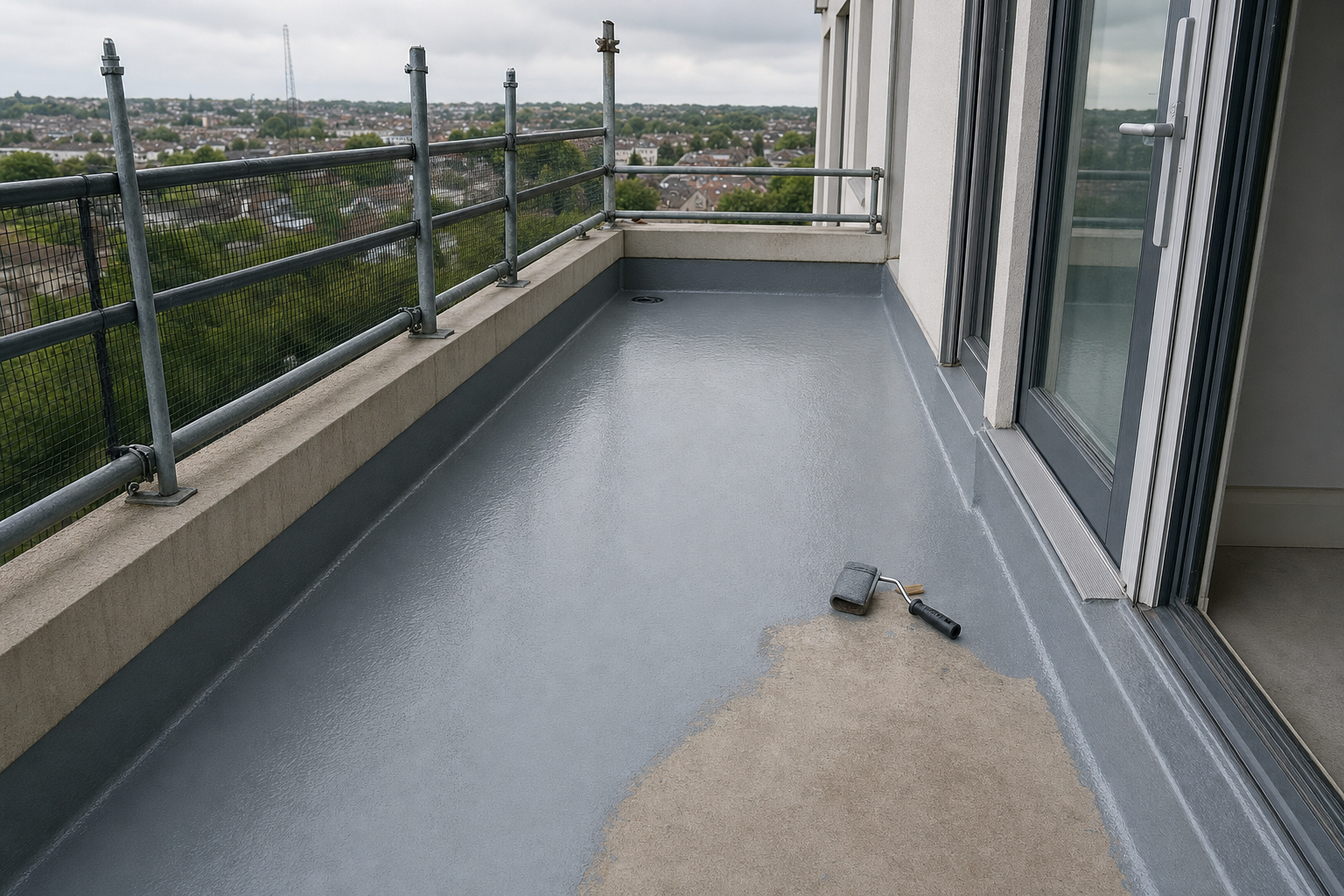
What proper balcony waterproofing puts right
Leak-prone junctions remade
Thresholds, corners, edges and outlets are treated as working details, not ignored extras.
Deck condition checked first
A new waterproof layer works best when the balcony structure below it has been assessed.
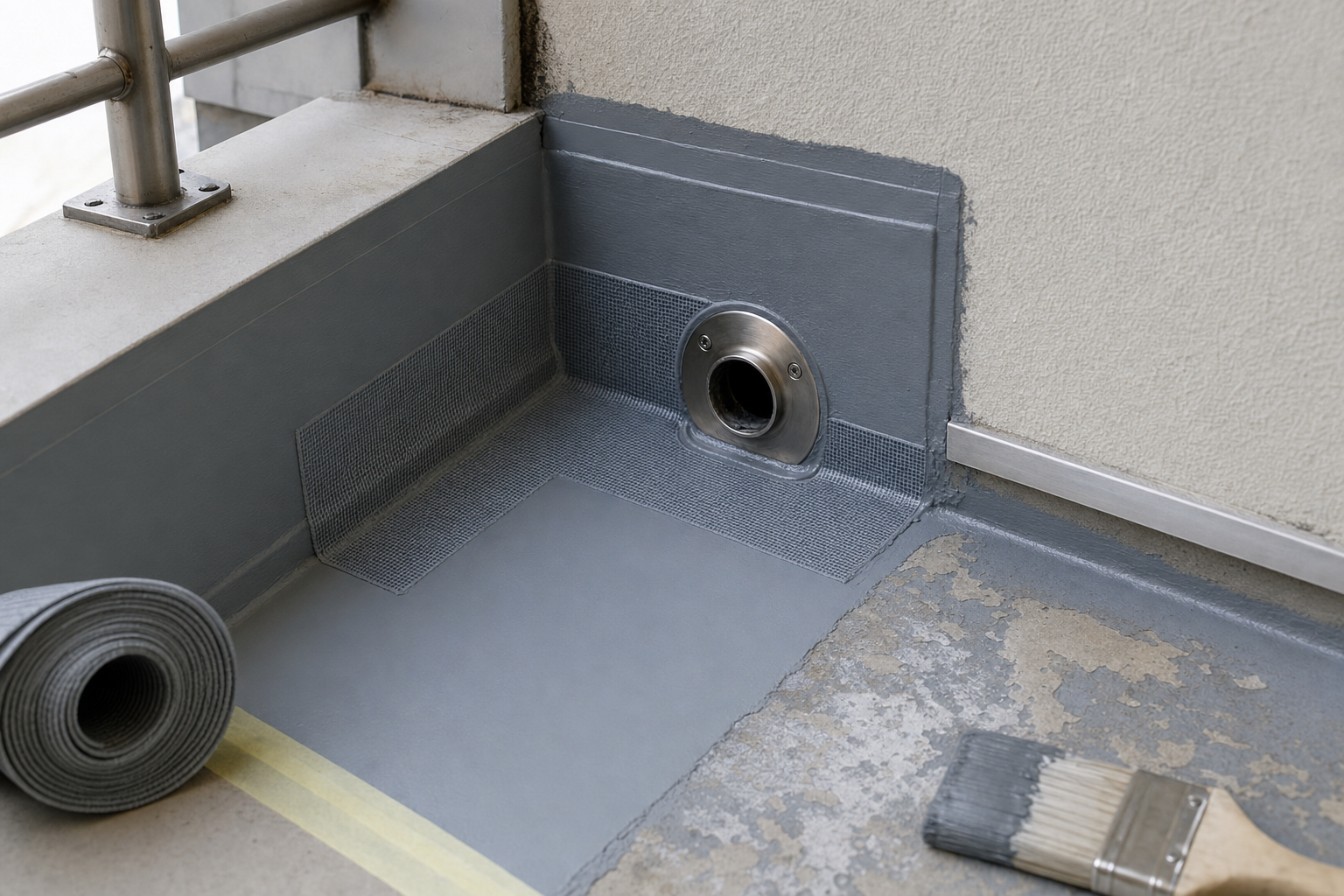
Most balcony leaks start at the awkward bits
Once water gets through a balcony surface, it can attack the deck below and the room beneath before you realise how far it has spread. The weak points are often the details: door thresholds, wall upstands, corners, outlets, perimeter edges and balustrade fixings. We assess the surface condition, the existing waterproofing, the drainage falls and the stability of the deck before deciding what remedial work is needed. With Amac Roofing, balcony waterproofing is about restoring a continuous defensive layer across the whole area, not smearing over the place where the leak first caught your eye.
GRP can provide a continuous waterproof surface
Fibreglass or GRP can be a strong solution for suitable balconies because it forms a continuous waterproof layer that can be carefully detailed around awkward junctions. The job still depends on proper preparation. We correct defective details, prepare the balcony deck, install the waterproof layer and finish the surface so the system ties into edges, thresholds and outlets properly. Choosing Amac Roofing means the balcony is assessed as a whole, with the route of water and the condition below the surface taken seriously before new materials go down.
Frequently asked questions
What usually causes a balcony to start leaking?
Thresholds, edges, outlets, corners and balustrade fixings are common trouble spots, especially when the waterproof layer has broken down or the drainage is poor. The visible crack is not always the whole story. We inspect the layout and the build-up before deciding how the leak should be repaired.
Is fibreglass suitable for balcony waterproofing?
It can be, where the balcony build-up and deck are suitable. GRP forms a continuous waterproof surface and can be detailed carefully around tricky junctions, which makes it useful on many balconies. We still check the structure, falls and edges first rather than treating it as automatic.
Why do thresholds and outlets need close inspection?
Because they are common entry points for water. A balcony can look sound in the middle while leaking badly at the doorway or outlet. We pay close attention there so the waterproofing joins up properly and water is directed away instead of being allowed to linger or track inward.