
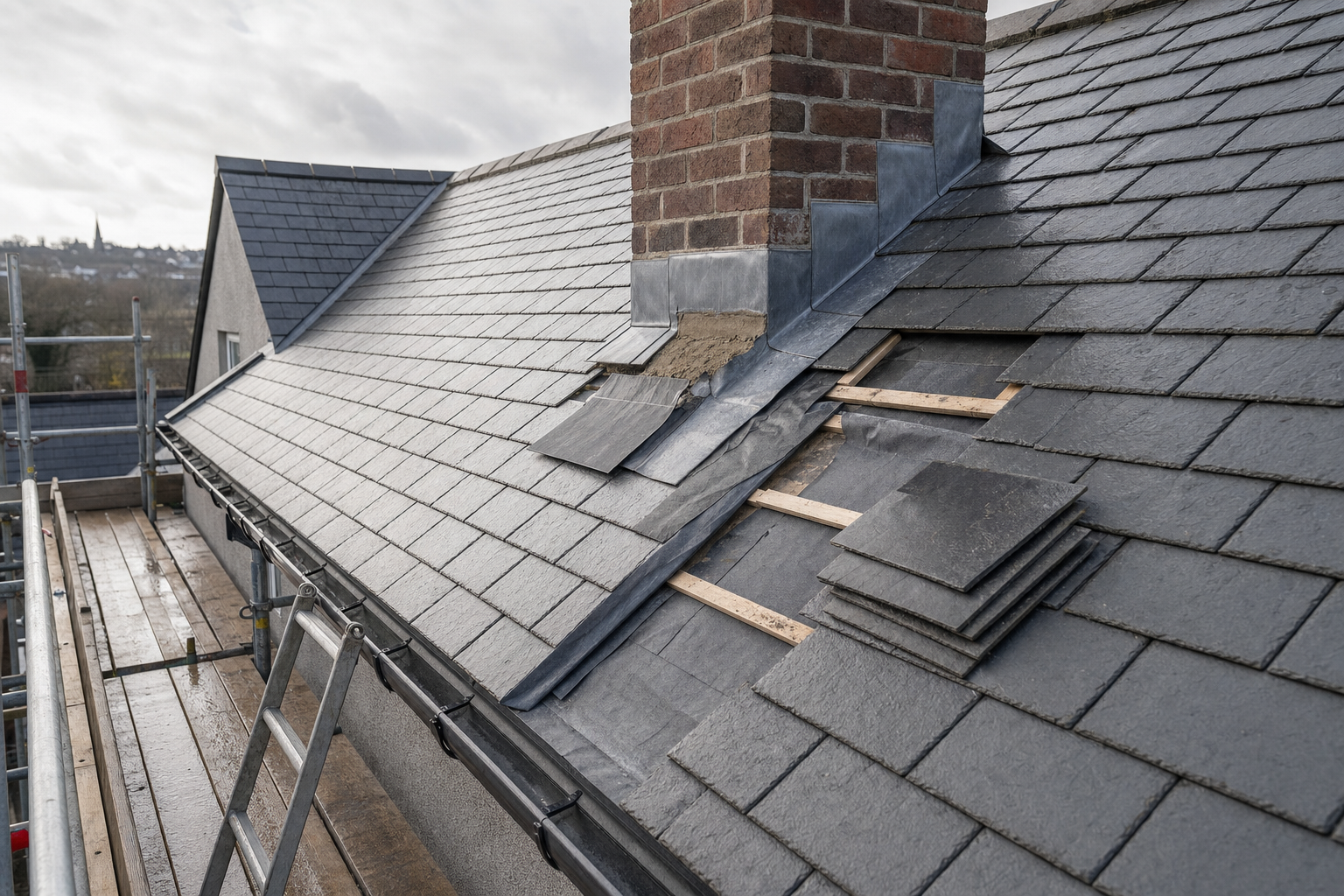
Why proper leak tracing saves time and money
Source found before repairs
We follow the route of the water instead of assuming the entry point sits above the stain.
Repair matched to the cause
Flashings, coverings and junction details are fixed according to what has actually failed.
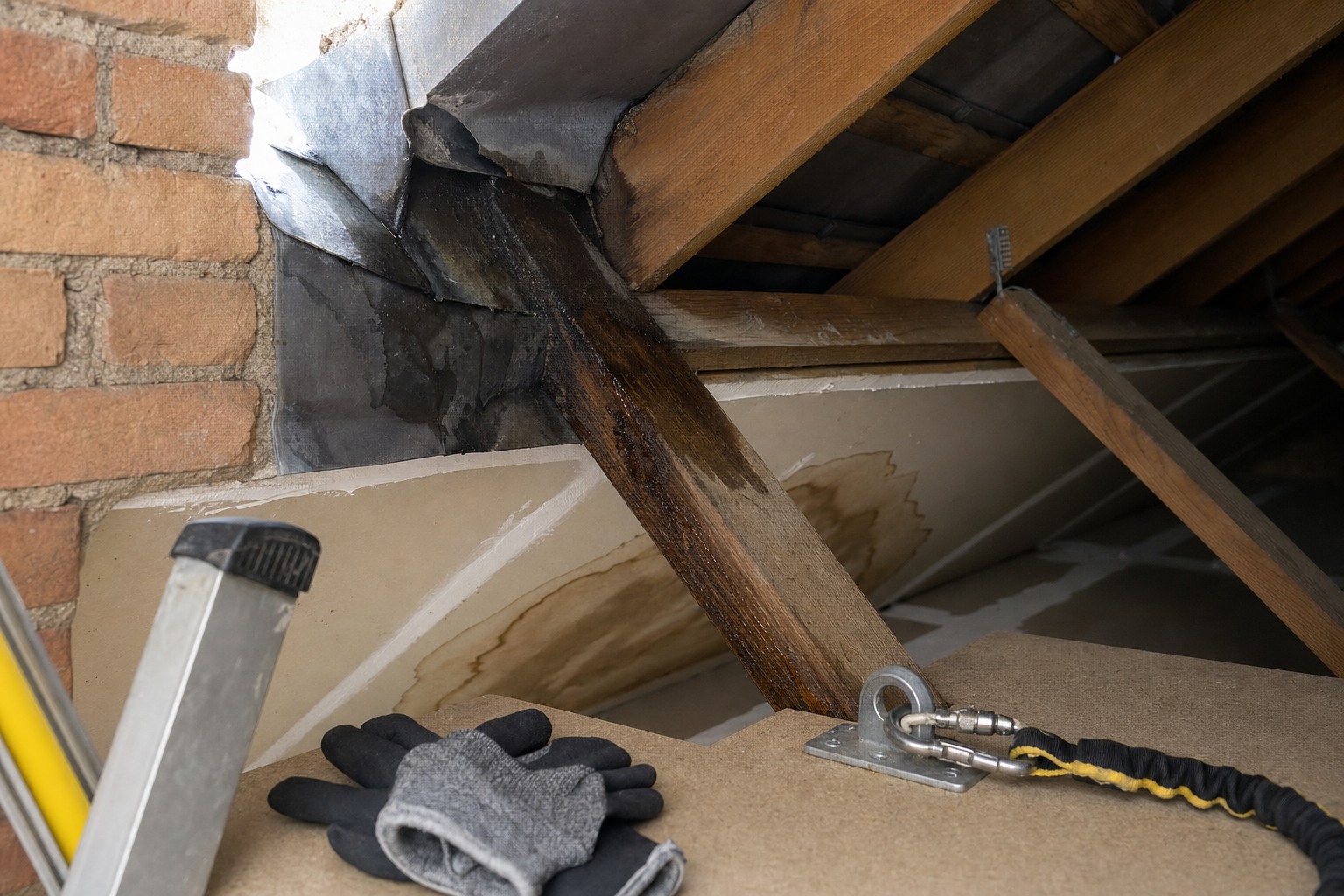
The stain indoors is not always under the leak
A damp patch on the ceiling has a habit of pointing the finger at the wrong place. Water can travel along timbers, membranes and roof junctions before it finally shows itself indoors, which is why roof leaks need tracing rather than guessing. We inspect the reported problem area, then look at the roof sections above and around it for likely sources such as damaged flashings, slipped coverings, failed seals, weak valleys and roof-to-wall junction defects. With Amac Roofing, leak repair work starts by finding the true route of the water instead of chasing the mark it leaves behind.
Useful details help us trace the leak faster
It helps to know when the leak appears, whether wind direction seems to affect it and whether the staining is new or recurring. Those clues can point us toward the right part of the roof before we even climb up. Once the cause is found, we match the repair to it, whether that means replacing damaged coverings, renewing a failed flashing or correcting a waterproof detail at a junction. Choosing Amac Roofing means the repair work is tied to the actual source of the problem, not a hopeful dab at the nearest wet-looking area.
Frequently asked questions
Why is the leak not always above the ceiling stain?
Because water often travels before it shows. It can run along timbers, under membranes or through roof junctions, then appear some distance from the entry point. That is why we inspect the roof around the reported area rather than assuming the mark on the ceiling tells the whole story.
What details should I give about a roof leak?
Tell us where the water is appearing, when it tends to happen, whether certain wind directions make it worse and if the staining is new or has happened before. Photos help as well. Those details can make the inspection more focused and stop time being wasted in the wrong area.
Can a leak come from flashing rather than the covering?
Yes, very often. Damaged flashings, weak valleys, failed seals and roof-to-wall junction faults are common leak sources, even when the slate, tile or flat roof covering nearby looks reasonable at first glance. That is why diagnosis matters before repair materials come out.