
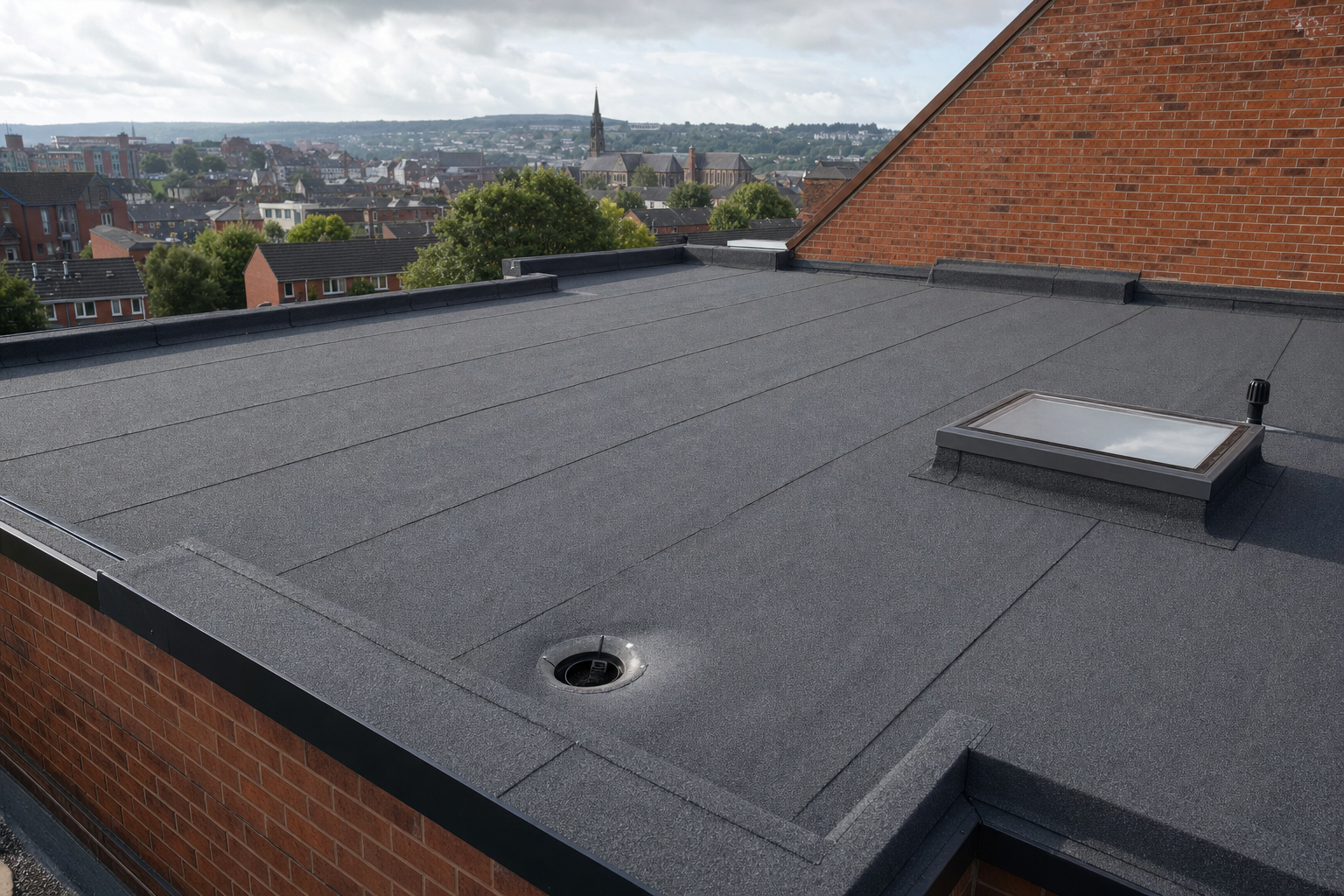
Why torch-on felt still earns its place
Layered strength where it counts
Bonded layers create a robust waterproof build-up on many flat and low-slope roofs.
Edges and laps done properly
The roof stays reliable when seams, upstands and outlets are formed with care.
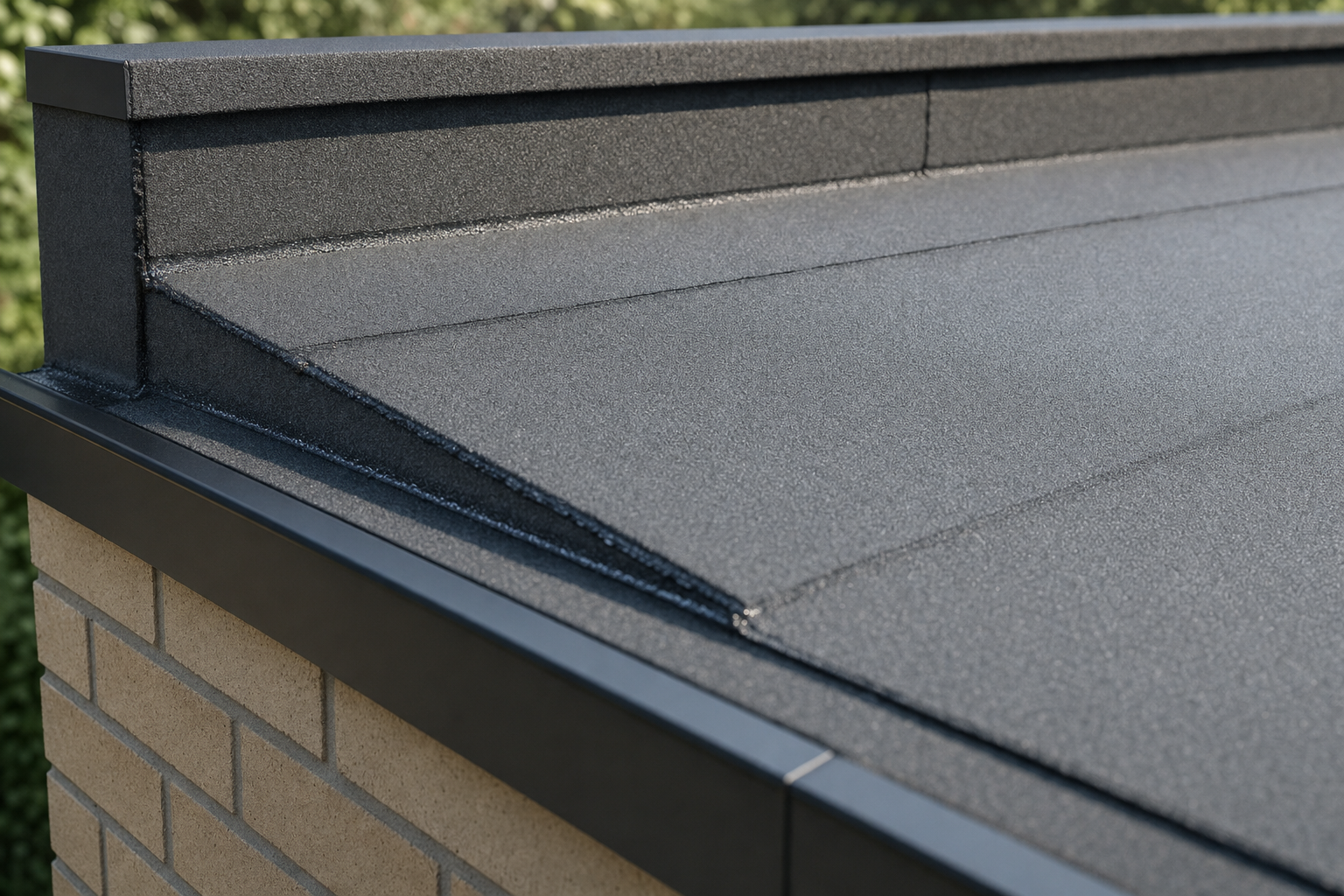
A proven layered roof for garages and extensions
Torch-on felt roofing uses reinforced bituminous layers bonded together to create a durable waterproof covering. It remains a practical choice for many garages, extensions and other flat or low-slope roofs where a robust layered system suits the structure and use. The work begins with the prepared deck, then the underlayer and mineral-finished cap sheet are installed with properly formed laps and perimeter details. Those bonded layers need control and care, especially around outlets, upstands and penetrations. With Amac Roofing, torch-on felt is treated as skilled detail work, not something to be rushed before the weather turns.
The right felt roof depends on the roof beneath it
Before recommending torch-on felt, we look at the substrate condition, roof shape, access and existing materials. That tells us whether the system is appropriate and what preparation is needed first. Once underway, the quality comes from even bonding, tidy seams and secure treatment at every edge where water likes to test the job. Households often choose felt because it gives a solid, familiar finish on many everyday flat roofs, but it still needs proper craft to perform well. Choosing Amac Roofing means getting that attention to laps, corners and drainage points from the start.
Frequently asked questions
Where is torch-on felt roofing a good choice?
It is commonly used on garages, extensions and other flat or low-slope roofs where a layered bituminous system suits the build. We still inspect the deck, access and shape first. Good felt work is about using the right system on the right roof, not applying one answer everywhere.
What is included in a torch-on felt roof build-up?
The build-up usually starts with a prepared deck, followed by an underlayer and a mineral-finished cap sheet, with laps and perimeter details formed as part of the system. The exact spec depends on the roof. We explain the build-up clearly before work begins so you know what is being installed.
How do you stop felt edges and seams from failing?
The protection comes from good preparation, controlled bonding and careful formation at laps, upstands, outlets and corners. Those are the points where weak work soon shows up. We pay close attention there because the flat middle section is rarely the part that lets a roof down first.