
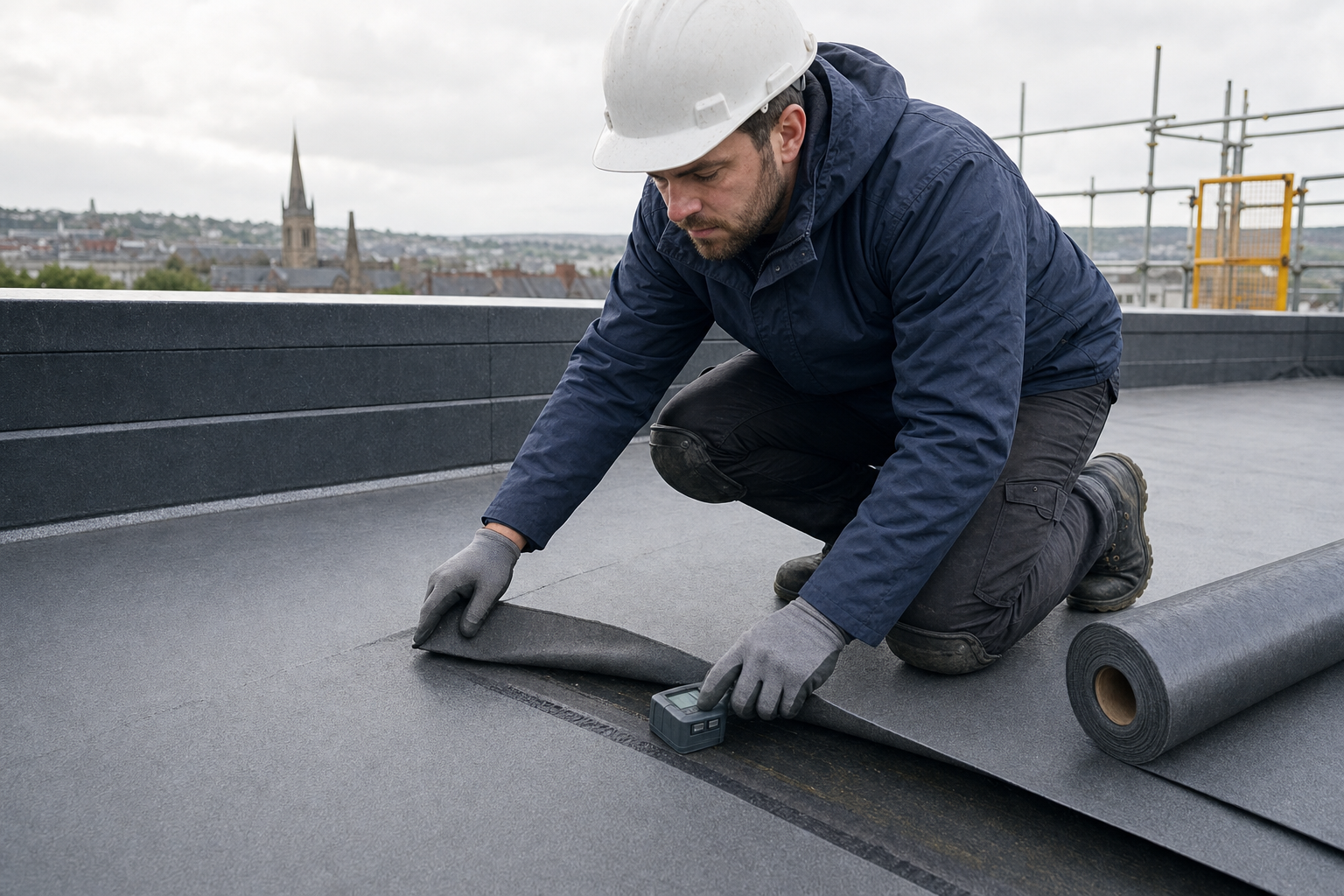
What a suitable flat roof overlay can achieve
Keeps sound layers in use
Recovering can avoid a full strip where the existing roof build-up is still worth retaining.
Moisture and deck checked first
We look for soft areas and trapped damp before agreeing that overlay is a safe option.
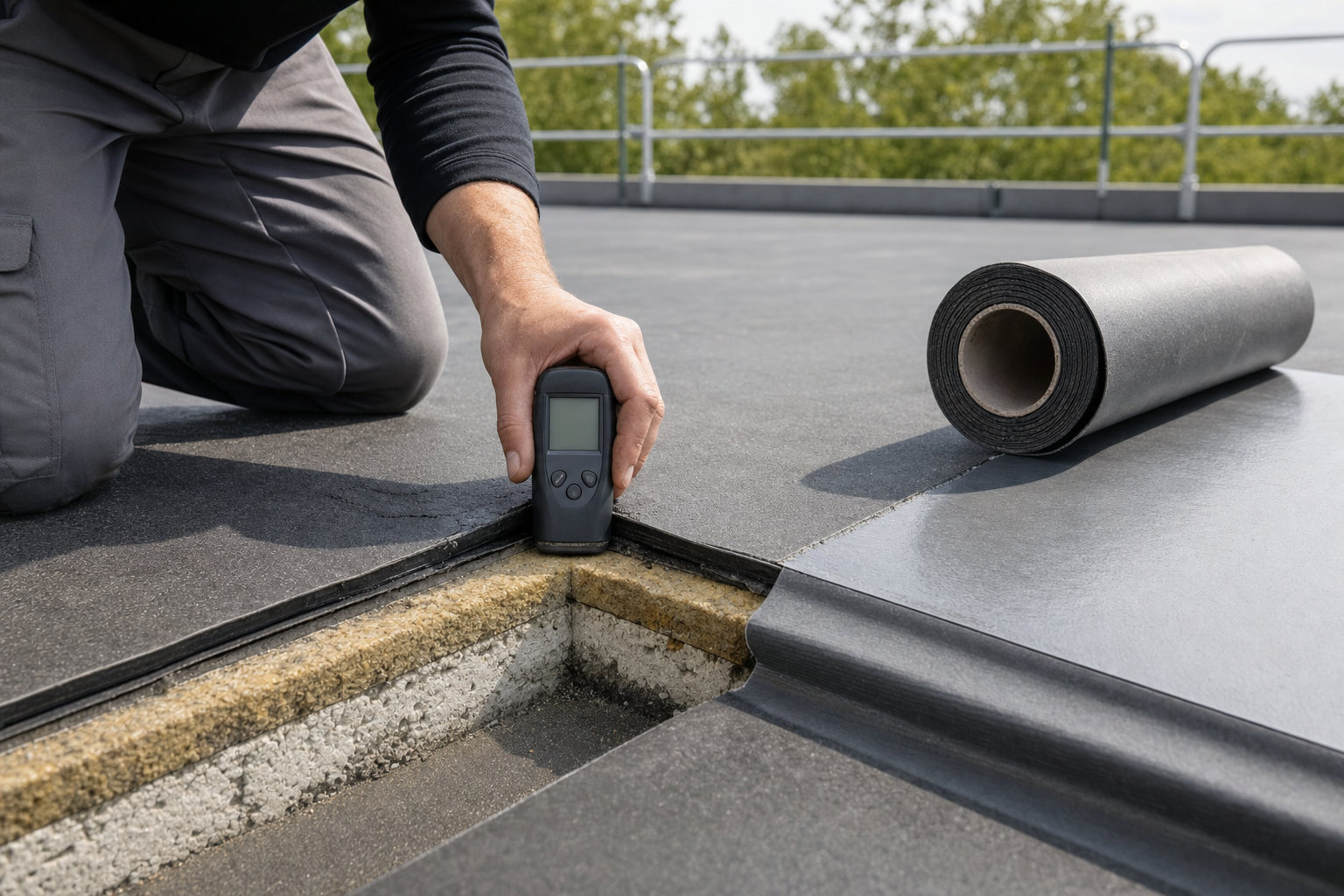
Recovering can work when the roof underneath is sound
Flat roof recovering means adding a new compatible waterproof layer over an existing flat roof assembly instead of stripping the whole thing off. It can be a practical route when the existing build-up is stable enough to keep, but it is never a job to wave through blindly. We inspect for trapped moisture, loose materials, soft decking, poor falls and any defect that needs dealing with first. With Amac Roofing, recovering is only recommended when the condition of the roof beneath it supports that choice. If the old roof is hiding bigger trouble, we will say so rather than bury it under a new layer.
Preparation decides whether an overlay will last
Before a recover goes ahead, the existing surface needs cleaning, securing and levelling, while outlets, edges and upstands may need adapting to suit the increased build-up. The material already on the roof and the condition it is in both influence the recovering system and how it can be fixed. We also compare overlay against full replacement in plain terms, because the cheaper-looking route is not always the better one if the deck or moisture condition says otherwise. Choosing Amac Roofing means getting a sensible answer on when recovering is worthwhile and when a full strip is the safer call.
Frequently asked questions
When is a flat roof overlay a sensible option?
Usually when the existing roof assembly is stable enough to keep and there is no sign of serious trapped moisture, loose layers or failing decking. We inspect those points first. Recovering can be practical, but only when the old roof is still doing enough of its job to build on.
What can make a roof unsuitable for recovering?
Soft decking, trapped moisture, loose materials, poor falls or defects that have not been corrected first can all rule it out. In those cases, an overlay may simply hide the problem for a while. We would rather tell you that plainly than dress up a weak roof with another layer.
How is recovering different from full replacement?
Recovering adds a new waterproof layer over the existing roof once it has been prepared and judged suitable. Full replacement strips failed materials away and rebuilds the roof from the substrate upward. The right choice depends on the integrity of the roof beneath the surface.