
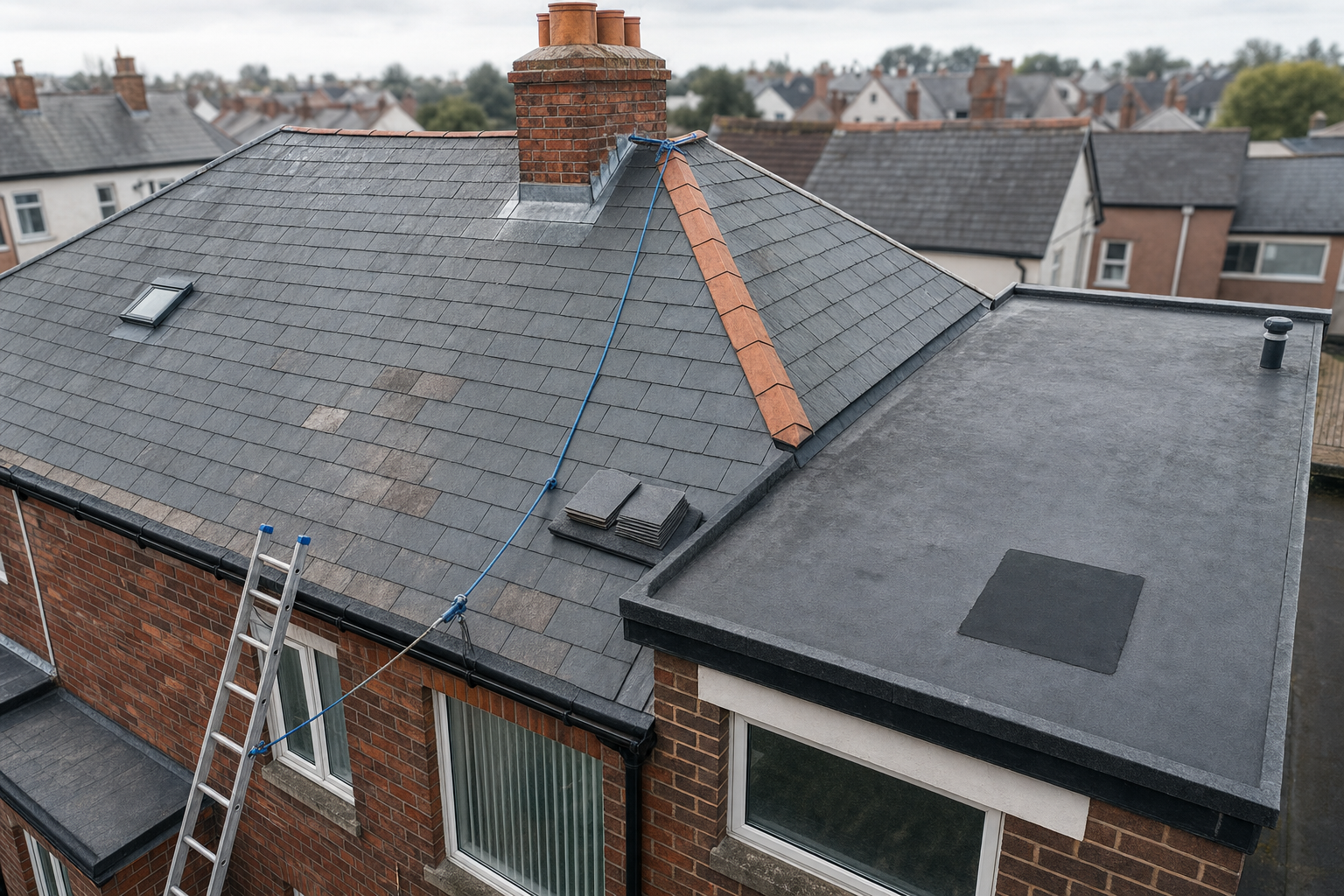
Why routine roof checks are worth doing
Early faults spotted plainly
Loose coverings, ageing seals and blocked drainage routes are easier to tackle early.
Priorities set in order
We help sort minor watch points from repairs that should move to the front of the queue.
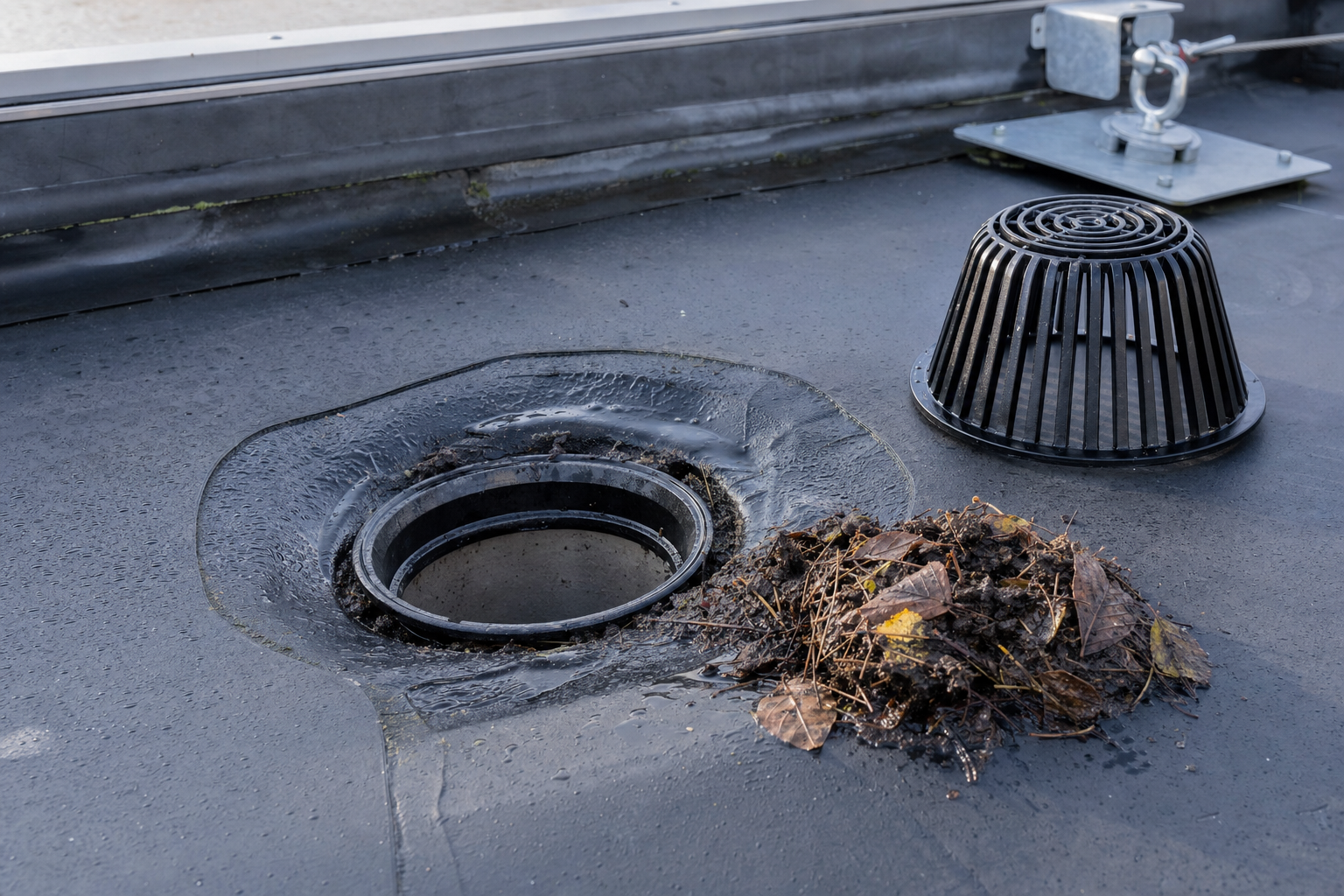
Small roof faults are easier to deal with early
Most roof trouble starts out looking harmless. A loose tile, a tired seal, a blocked outlet or a weak edge detail may not seem urgent until water finds it first. Regular roof inspection and maintenance gives us the chance to spot those issues before they grow into soaked insulation, stained ceilings or decayed timber. On flat roofs, we check the membrane surface, seams, trims, upstands, outlets and areas where water or debris may collect. With Amac Roofing, maintenance is about catching the roof on an ordinary day, before it decides to introduce itself through the bedroom ceiling at two in the morning.
Clear priorities and a record of what we found
Pitched roof maintenance also means checking slates or tiles, ridges, verges, valleys, flashings and any visible issue with timber or membrane. Once we have seen the roof, we can help separate what needs monitoring from what calls for minor remedial work or something more substantial. Keeping a clear record of observed defects and completed work also makes future decisions easier, especially when a problem returns in a changed form. Choosing Amac Roofing means getting practical findings in plain English, not a vague shrug and a suggestion to keep an eye on it.
Frequently asked questions
How often should a roof be checked?
That depends on the roof type, age and how exposed the property is, but periodic inspections are a sensible way to stay ahead of trouble. The aim is to catch small defects before water damage spreads. We can advise on what level of attention makes sense once we have seen the roof.
What do maintenance visits look at on a roof?
On flat roofs, we check the membrane, seams, trims, upstands and outlets. On pitched roofs, we look at the slates or tiles, ridges, verges, valleys and flashings, along with any visible issue in the supporting elements. The focus is on weak points that often fail first.
Do you keep a record of the defects found?
Yes, where maintenance work is carried out, clear notes on what was observed and what was done are useful. That helps you track changes over time and makes later decisions more grounded. Roofs do not always fail in one dramatic moment. Often they leave a paper trail first.