
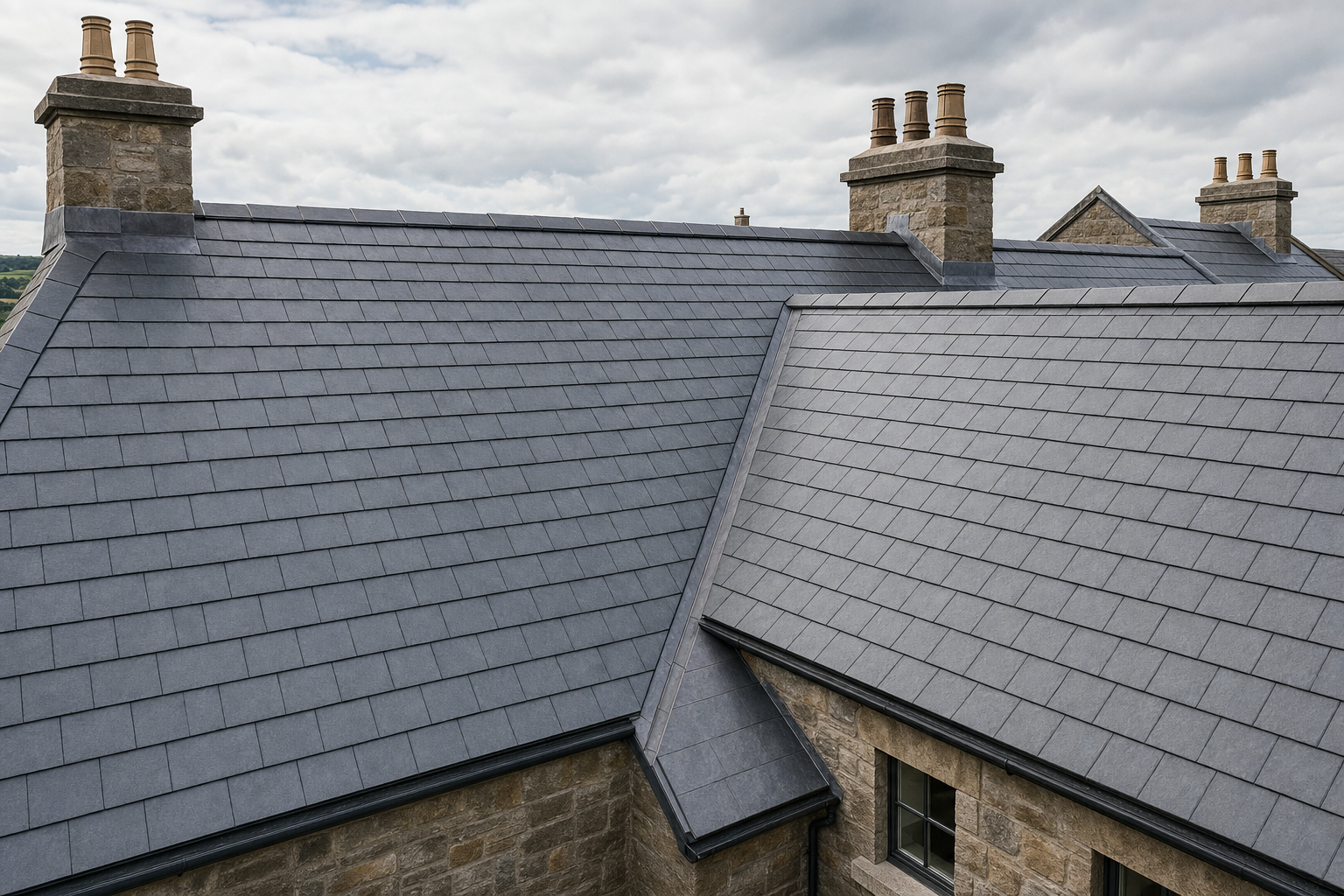
What a well-built slate roof gives you
Slates matched properly
Size, weight and appearance are chosen to suit the roof instead of being guessed at.
Straight, consistent courses
Careful setting out keeps the roof looking ordered rather than wandering out of line.
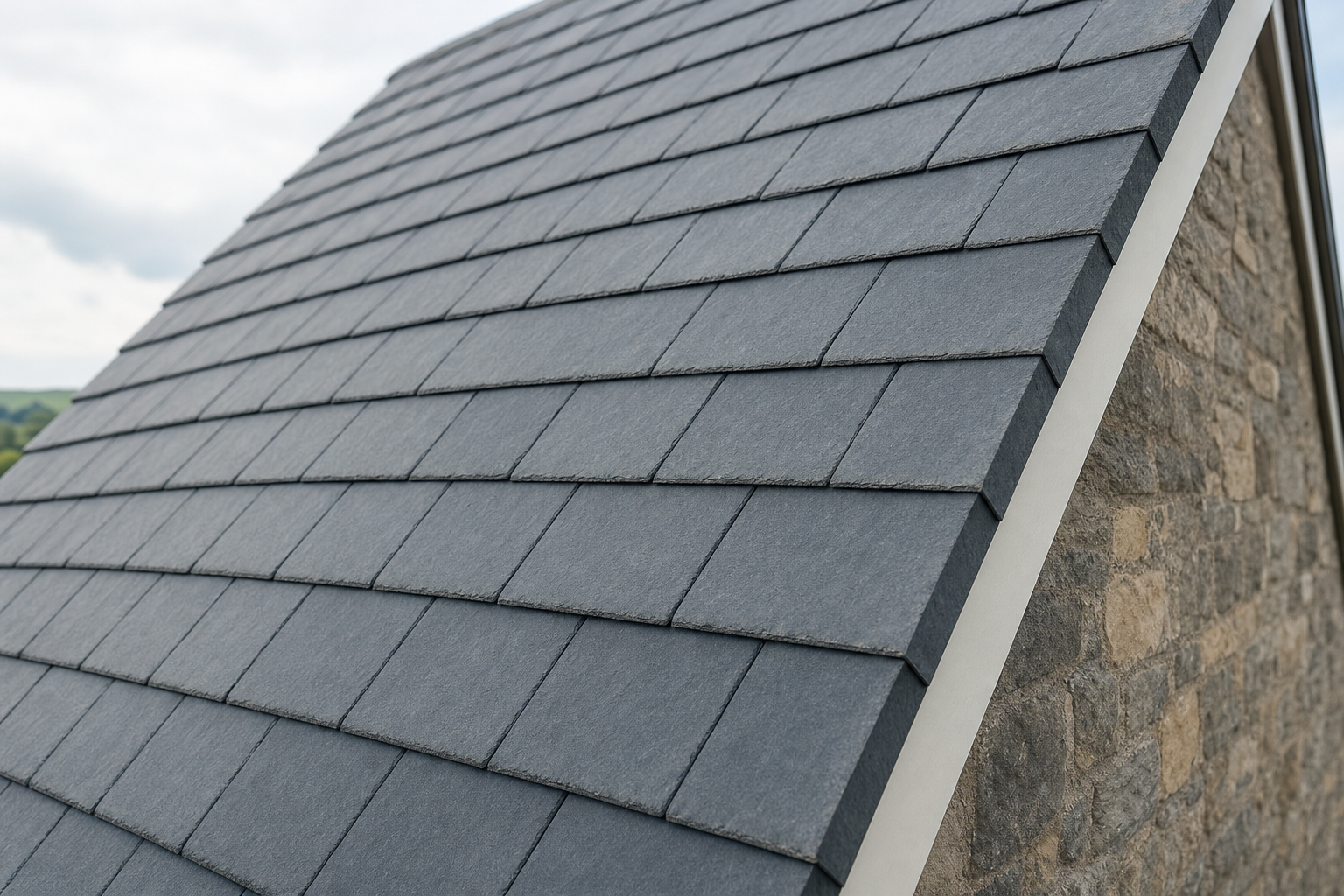
Slate only looks right when it is set out right
A slate roof depends on more than the slate itself. Size, type, appearance and weight all need to suit the pitch of the roof, the supporting structure and the finish you want on the property. Before slates are fixed, we look at the build below them, including the membrane, battens and the setting out across the roof. Correct headlap, straight alignment and secure fixing matter from the first course onward, especially at eaves, verges, ridges and abutments. With Amac Roofing, new slate work is planned as a full roof system, not as a pile of good-looking pieces waiting to be nailed on.
Flashings and junctions matter as much as the slates
Even the best slate can only do so much if the surrounding details are weak. Chimneys, roof windows, valleys and other penetrations all need proper flashing and weatherproof treatment, because that is where water usually tests a roof hardest. We focus on keeping the courses consistent and the junctions tidy so the finished roof complements the character of the house and stands up well to the weather. Choosing Amac Roofing means getting a slate roof where the visible lines are neat and the less visible waterproof details have not been cut short.
Frequently asked questions
How do you choose the right slate for a roof?
We look at the roof pitch, the structure below, the weight the roof can take and the appearance you want. Those factors guide the slate choice. It is not just about what looks nicest in a sample. The slate has to suit the roof it is going on.
What preparation happens before slates are fixed?
The supporting structure, roofing membrane, battens and the setting out all need attention before the first slate is laid. Those parts control alignment, headlap and fixing. If the groundwork is poor, the finished roof rarely improves as the job goes on.
Why are flashings part of a slate roof installation?
Because a roof does not stop at the slate courses. Water can get in at chimneys, valleys, roof windows and abutments if those details are weak. We treat the flashings as part of the same system, so the slate roof works as one coordinated covering rather than a set of separate bits.